
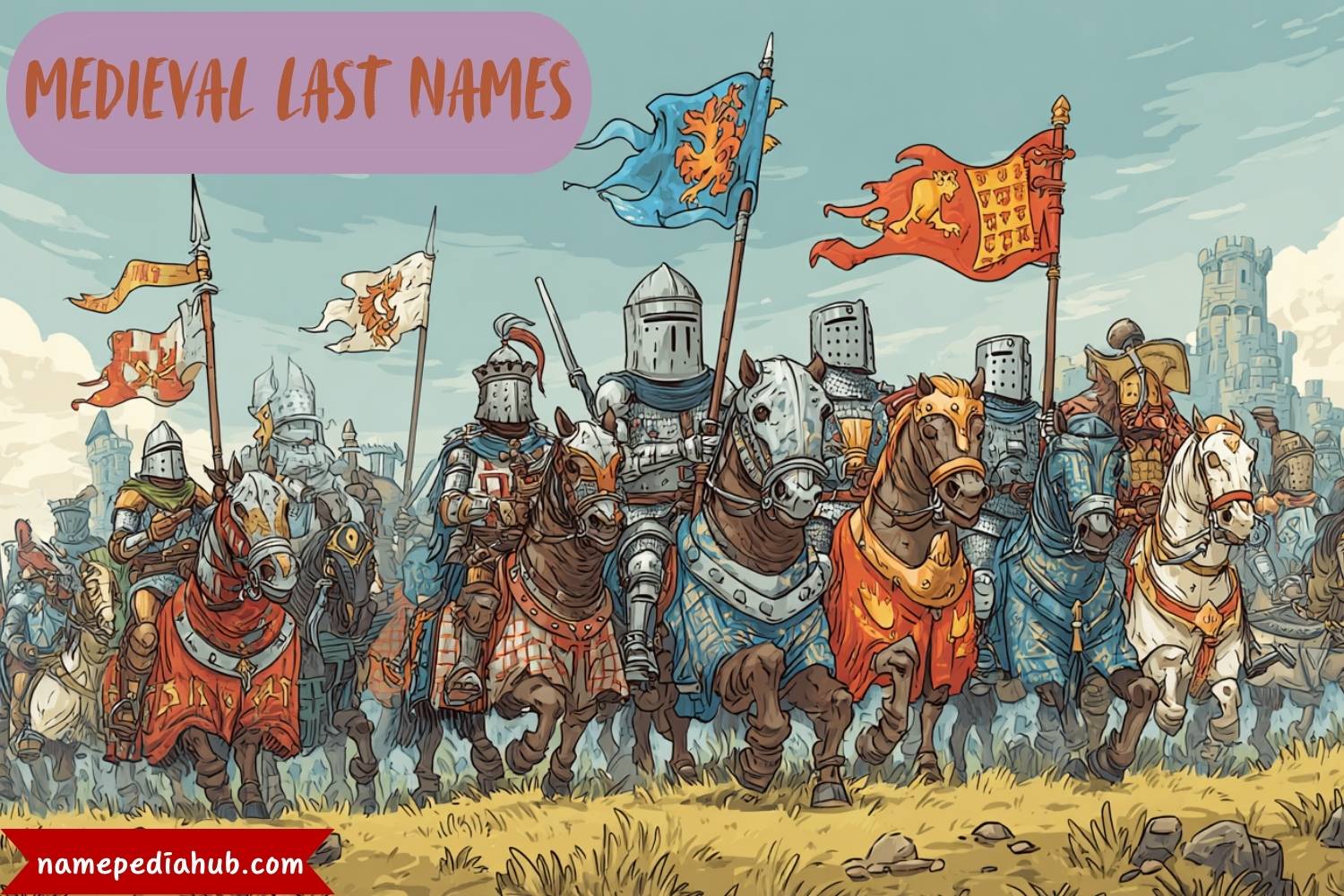
Long ago, people did not use last names. One John was not enough. So they added more words to help. This is how medieval last names were born. They told stories about jobs, homes, and families. Some were serious. Some were a little funny.
A man who baked bread became Baker. A man near a hill became Hill. Simple and useful. These names helped people know who was who. Today, medieval last names still feel strong and playful. They sound old, a bit fancy, and sometimes silly in a quiet way. That is what makes them fun to explore.
What Are Medieval Last Names?
Medieval last names are family names from long ago. They started in the Middle Ages. This was a time of castles, villages, and long roads. People shared first names, so they needed more words to tell them apart. A last name did that job.
These names came from simple things. Jobs, places, family, or looks. A man who worked with iron might be called Smith. Someone near a forest might be called Wood. The names were easy to remember. They helped people feel known, even in a busy town.
Why People Used Last Names in Medieval Times
In medieval times, last names developed out of necessity rather than tradition. As populations grew and communities expanded, a single given name was no longer enough to clearly identify individuals. Surnames helped distinguish people from one another and provided useful information about a person’s background, occupation, or family ties.
- Population Growth – As villages and towns became larger, many people shared the same first names, making additional identifiers necessary.
- Occupation Identification – Many last names came from jobs, such as Smith, Miller, or Baker, helping others know what a person did for a living.
- Family Lineage – Surnames often showed family relationships, using patronymics like Johnson (son of John) to indicate descent.
- Place of Origin – People were sometimes named after where they lived or came from, such as Hill, Brook, or York.
- Descriptive Traits – Physical features or personality traits inspired names like Short, Strong, or Brown.
- Legal and Tax Purposes – Governments and landowners needed clearer records for taxes, property ownership, and legal matters.
- Gradual Standardization – Over time, these identifiers became hereditary, turning practical labels into permanent family names.
Medieval Last Names Based on Jobs
These last names came from the jobs people did every day. Work mattered a lot back then. If you baked, built, or cleaned, your job could become your name. Some sound strong. Some sound a little funny.
- Millerstone
- Iron Hand
- Wheelwright
- Field Cutter
- Breadmaker
- Stone Mason
- Cloth Turner
- Grain Carrier
- Rope Twister
- Bell Ringer
- Torch Bearer
- Water Drawer
- Hammerfall
- Wood Chopper
- Ale Brewer
- Cart Puller
- Silver Polish
- Nail Maker
- Brick Layer
- Horse Tamer
- Net Weaver
- Smoke Lifter
- Shield Painter
- Boot Stitcher
- Coal Shovel
- Tool Keeper
- Gate Watcher
- Pot Turner
- Fish Sorter
- Oil Grinder
- Bread Cutter
- Clay Digger
- Rope Hand
- Barn Fixer
- Torch Maker
Medieval Last Names Based on Places
These last names came from where people lived. A road, a hill, or a river was enough. Home mattered a lot. Sometimes the place name stuck longer than the house. That is kind of funny.
- Hillford
- Stonebridge
- River End
- Oakfield
- Cross Lane
- Meadowbrook
- East Hollow
- West Ridge
- Pine Corner
- Brookside
- North Gate
- South Field
- Mill Path
- Lake Shore
- Clay Hill
- Green Vale
- Long Road
- Frost Valley
- Sun Meadow
- Old Ford
- Ash Grove
- Field Edge
- Moss Creek
- High Rock
- Low Plain
- Wind Corner
- Mud Lane
- Birch End
- Hollow Way
- Bright Hill
- Still Water
- Gate End
- Deep Vale
- Stone Path
- Open Field
- Quiet Brook
- Wood Crossing
- Far Ridge
- Clear Pond
- Round Hill
Medieval Last Names Based on Family
These last names came from family ties. Kids were known by a parent or a kin. It was simple and clear. Sometimes it sounds warm. Sometimes it sounds like a roll call.
- Son of Alden
- Kinward
- Childman
- Firstborn
- Old Father
- Young Son
- True Kin
- House Heir
- Bloodline
- Clan Hand
- Family Root
- Line Keeper
- Name Holder
- Hearth Son
- Home Kin
- Branch Child
- Seed Line
- نسل Ward
- Kin Circle
- Bond Child
- Parent Link
- Heir Stone
- Kin Crest
- Tribe Hand
- Line Bearer
- Root Son
- Kin Trail
- Family Mark
- Name Seed
- Clan Foot
- House Line
- Bond Son
- Kin Anchor
- Blood Mark
- Root Child
- Home Line
- Clan Root
- Line Son
- Kin Base
- Family Hand
Medieval Last Names Based on Looks
These last names came from how people looked. Tall, short, fast, or slow. People noticed small things. Some names were kind. Some made kids laugh.
- Bright Hair
- Long Beard
- Short Step
- Red Face
- Wide Smile
- Quick Foot
- Slow Walk
- Big Hand
- Small Eye
- Strong Back
- Round Cheek
- Thin Arm
- Dark Brow
- Fair Skin
- Loud Voice
- Soft Step
- Sharp Nose
- Calm Face
- Tall Frame
- Light Hair
- Deep Eye
- Broad Chest
- Quick Blink
- Gentle Look
- Curly Head
- Straight Back
- Long Leg
- Quiet Face
- Warm Smile
- Fast Turn
- Solid Build
- Keen Eye
- Soft Hand
- Bright Look
- Heavy Step
- Clear Face
- Calm Eye
- Wide Brow
- Swift Move
- Plain Face
Common Medieval Last Names
These last names were heard often in villages and towns. People knew them well. They felt normal and safe. You might hear them called out at the market. More than once.
- Stonefield
- Oakman
- Riverwood
- Hilltop
- Brookman
- Fieldson
- Woodhall
- Lanefoot
- Fordman
- Meadowson
- Claywood
- Greenhill
- Crossman
- Plainfield
- Ashcroft
- Wayman
- Parkside
- Moorfield
- Ridgeway
- Valewood
- Farmhand
- Grounder
- Bridgefoot
- Stoneway
- Fieldward
- Townend
- Pathman
- Brookfield
- Woodside
- Gatefield
- Landman
- Hillward
- Earthson
- Plainway
- Roadman
- Grovefield
- Fieldmark
- Bankwood
- Yardman
- Placefield
- Homeward
- Soilman
- Nearfield
- Midway
Rare Medieval Last Names
These last names were not common. You might hear them once and never again. They sound special and a bit mysterious. Like a secret passed down quietly.
- Frostmere
- Dawnridge
- Hollowmere
- Ashenvale
- Stillford
- Moonpath
- Emberfield
- Quietmere
- Stonewhisper
- Nightbrook
- Palehaven
- Driftvale
- Softmoor
- Greypond
- Cloudrest
- Dimfield
- Starhollow
- Mistward
- Lowhaven
- Coldridge
- Shadefield
- Calmford
- Deepmere
- Softland
- Farhollow
- Moonford
- Silentvale
- Frostpath
- Duskfield
- Thinbrook
- Oldmere
- Snowrest
- Clearshade
- Windmere
- Palecrest
- Darkpond
- Slowvale
- Stillpath
- Fogward
- Quietford
- Greyrest
- Farpond
- Softcrest
- Dimhollow
Funny Medieval Last Names
These last names sound a little silly. People back then did not mean to be funny. Time did that part. Reading them now can bring a small smile.
- Mudshoe
- Loudbelly
- Crooked Hat
- Sleepy Foot
- Big Sneezes
- Wobble Leg
- Loose Belt
- Snore Beard
- Grumpy Face
- Bumpy Nose
- Slow Socks
- Chuckle Chin
- Wiggle Ear
- Messy Hair
- Flat Bread
- Slipper Heel
- Jumpy Knee
- Giggle Hand
- Crook Tooth
- Soft Belly
- Wonky Eye
- Bent Hat
- Squeak Boot
- Shaky Spoon
- Tired Walk
- Loud Step
- Noodle Arm
- Drippy Nose
- Lopsided Smile
- Bouncy Beard
- Sneaky Shoe
- Floppy Cap
- Tickle Foot
- Wiggly Brow
- Clumsy Hand
- Snappy Jaw
- Puddle Sock
- Twisty Belt
- Jolly Chin
- Silly Step
- Blinky Eye
- Rumple Shirt
- Crooked Sock
- Chuckle Toe
Strong Medieval Last Names
These last names sound bold and firm. They feel steady, like stone walls and heavy doors. People with these names seemed tough. Even the names stand up straight.
- Ironwall
- Stoneguard
- Hardcrest
- Shieldrock
- Boldhammer
- Stronghold
- Ironfield
- Firmhand
- Steelridge
- Rockbound
- Deepstone
- Wallmark
- Ironpath
- Stoneheart
- Guardhelm
- Thickwall
- Steelmark
- Hardridge
- Rockshield
- Ironcrest
- Firmstone
- Shieldford
- Stonegrip
- Wallcrest
- Ironwatch
- Strongridge
- Rockfield
- Guardstone
- Steelpath
- Hardwatch
- Ironbase
- Stoneward
- Firmcrest
- Shieldpath
- Rockhelm
Noble and Royal Medieval Last Names
These last names sound calm and grand. They feel slow and careful. Like long halls and soft steps. You can almost hear quiet crowns.
- Goldmere
- Crownfield
- Highcourt
- Brightvale
- Silverhall
- Kingford
- Royalmere
- Lordcrest
- Faircourt
- Noblefield
- Crownridge
- Highmere
- Silverpath
- Goldcrest
- Kingmere
- Royalfield
- Lordvale
- Fairhall
- Crownmark
- Highridge
- Silvermere
- Goldhall
- Kingcrest
- Royalcourt
- Lordmere
- Fairridge
- Crownvale
- Highfield
- Silvercrest
- Goldcourt
- Kinghall
- Royalridge
- Lordfield
- Fairmere
- Crownrest
Medieval Last Names for Pets
These last names sound playful and cute. They fit pets well. Small paws, big eyes, and funny walks. A serious name can still make you smile.
- Sir Wagtail
- Lady Softpaw
- Barkston
- Whiskerfield
- Purrwell
- Tailhop
- Fluffridge
- Pawford
- Sniffmere
- Furwell
- Wigglepaw
- Napfield
- Bouncehill
- Softtail
- Meowridge
- Pawpath
- Fuzzmere
- Tailspin
- Purrfield
- Snoutford
- Flop ear
- Tinyclaw
- Wagfield
- Cozyfur
- Pawcrest
- Sleepy tail
- Furryfoot
- Snugglepaw
- Hopmere
- Softnose
- Wigglefur
- Pawrest
- Naptail
- Puffpaw
- Tailmere
How to Choose a Medieval Last Name
Choosing a medieval last name means thinking the way people did in the Middle Ages, when surnames were practical identifiers rather than inherited labels at first. These names were based on everyday life, what someone did, where they lived, who their family was, or what they looked like. A good medieval-style last name should feel grounded, descriptive, and appropriate to the time period.
- Base It on an Occupation
Many medieval surnames came from jobs, such as Smith, Fletcher, Miller, or Baker. - Use a Place or Location
Names often referred to where someone lived, like Hill, Brook, Wood, or Atwater. - Choose a Patronymic Name
These names show family lineage, such as Johnson (son of John) or Richardson. - Draw From Physical Traits or Personality
Descriptive surnames like Short, Strong, Brown, or Stern were common. - Keep the Language Period-Appropriate
Stick to Old English, Norman, or early European-sounding words rather than modern terms. - Avoid Overly Fancy or Modern Styles
Medieval surnames were simple and functional, not elaborate or ornamental. - Think About Social Status
Nobles often had “de,” “of,” or estate-based names, while commoners had practical descriptors.
A Happy Ending From Long Ago
Medieval last names come from simple lives and big stories. They tell us who people were and what they did. Some sound strong. Some sound funny. Some sound cozy, like home.
These names still work today. You can use them for pets, stories, or just for fun. Reading them is like peeking into the past. A small peek, but a good one.
If a name makes you smile, keep it. If it makes you laugh a little, even better. Old names can still have new joy.